
The wind is triggering
Ebola, fires, floods, and the grief we're never given enough time to feel

On Monday night, I received a city-wide alert to shut my windows and stay inside—just moments before I began to smell what I would have otherwise assumed was a neighbor’s bonfire. Then, the texts started coming in: friends who wondered if I’d gotten the same alert, community group chats sharing resources on free air purifiers, gentle reminders that if this all feels a bit “triggering,” you’re not alone.
Even before I knew that fires would start burning all around me (to the West in Simi Valley, northeast in Angeles National Forest, and further East near Riverside), my body prickled with the sense of something familiar. I was running on the Los Angeles River bike path when I noticed I was constantly licking my lips, parched despite the several bottles of water and cup of electrolytes I’d downed earlier. There was something odd about the wind. It was drier and hotter than I’ve come to expect this time of year, when a foggy dome descends over Los Angeles for most of the morning and much of the day as cooler coastal breezes collide with warmer air and get trapped (people here call it “May grey”).
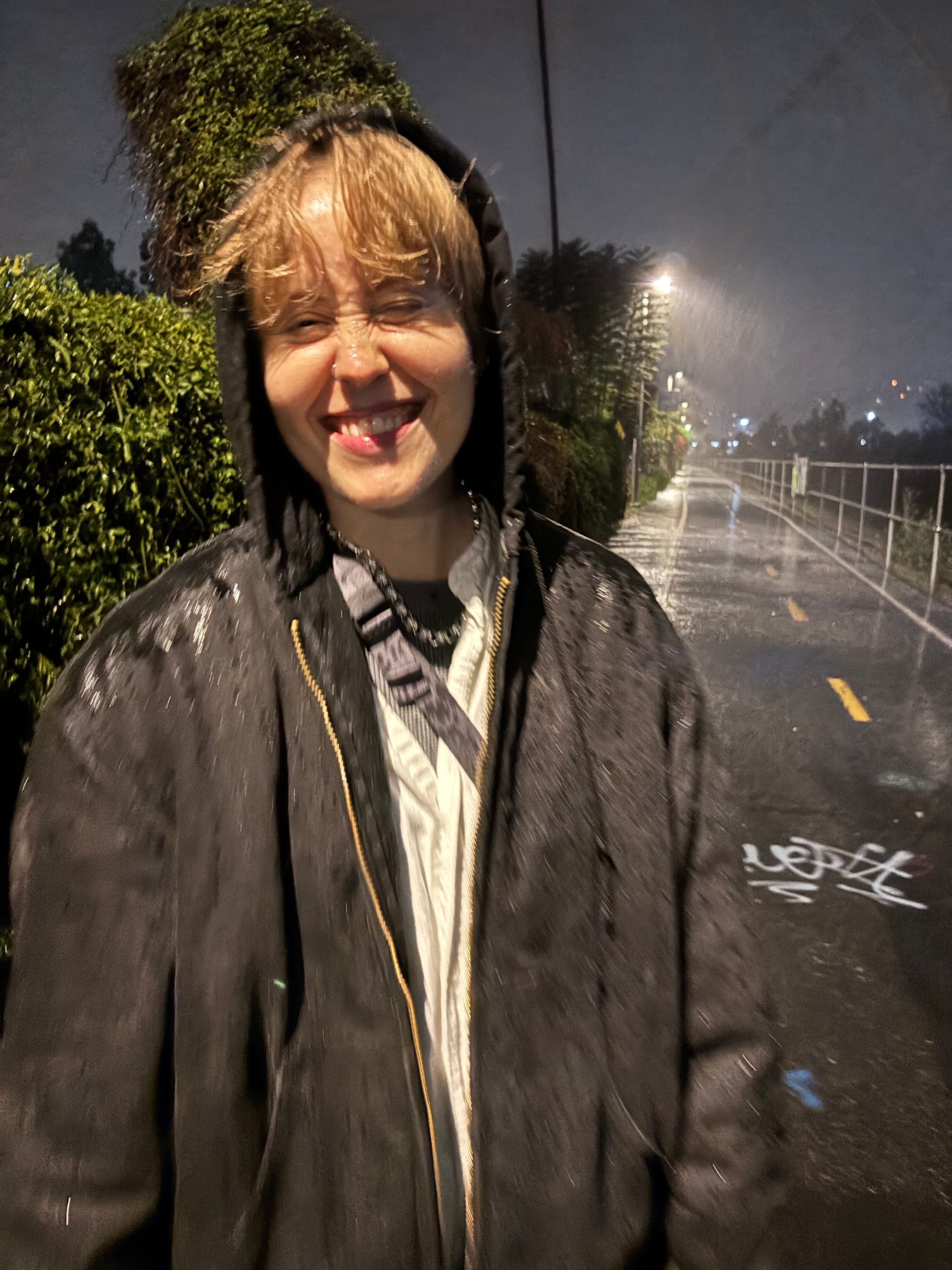
The air was not cool, lacked humidity, and there was little cloud cover. It kicked up small mounds of dust, jacaranda petals, and debris on the side of the path much like it did on the morning of January 7, 2025, when I left my house squinting against the grit in the air. Later that day, of course, fires ignited in Altadena and the Pacific Palisades that burned until February. Among my community alone, I personally knew twelve people who were displaced.
In 2023, I read a book on complex trauma. I was curious about the term after receiving a similar diagnosis from a therapist and talking to other Long COVID survivors and patients who felt that the symptoms associated with post-traumatic stress disorder (PTSD) did not fully capture their experience. Complex trauma, or C-PTSD, is often used to describe psychological responses that can form from the process of experiencing “chronic trauma.” It can occur when people endure long-term abuse, war, or any unrelenting period of traumatic events. In the case of the Long COVID community, people often described reinfections that led to new symptoms, and ongoing, worsening abandonment by family, friends, employers, the government, and society at large. In the aftermath of the January 2025 fires in Los Angeles, I’ve come to wonder whether more and more of us will identify with this diagnosis as climate change accelerates, and the impact of disasters and extreme weather continues without pause.
Because here’s the thing—whether the trauma you’re attempting to recover from was a pandemic that killed your loved ones and/or left you permanently disabled, or a fire that took your home, neighbors, community, and health, too many of us have never been given the time or space to grieve before we’re hit hard again.
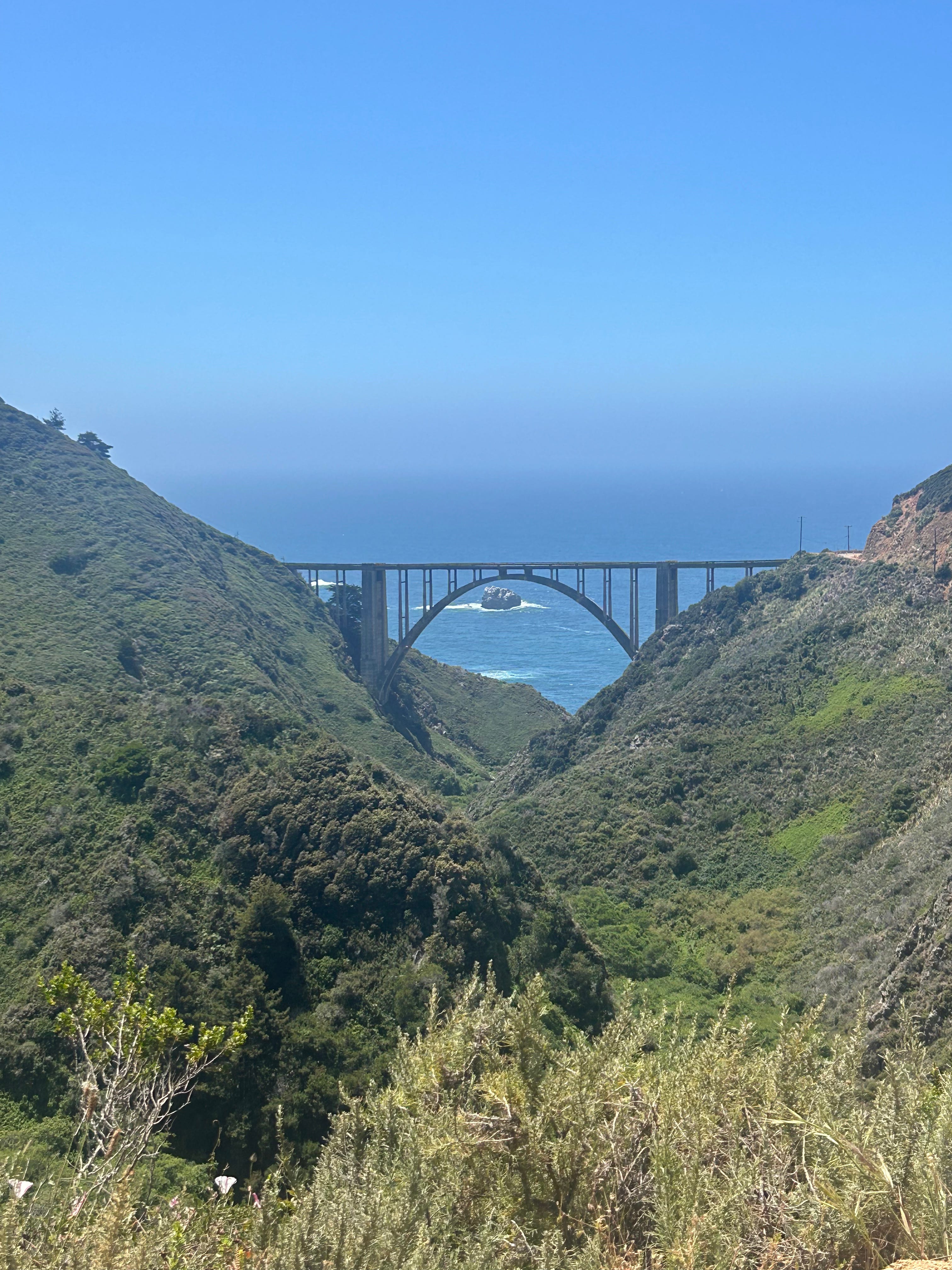
Last weekend, I was lucky enough to go on a Big Gay Camping Trip in Big Sur. As the eight of us sat around the fire, enjoying some home-cooked cobbler, the conversation turned to the concept of “climate grief.” We were, after all, hanging out in an area known for frequently (and increasingly) falling into the ocean.
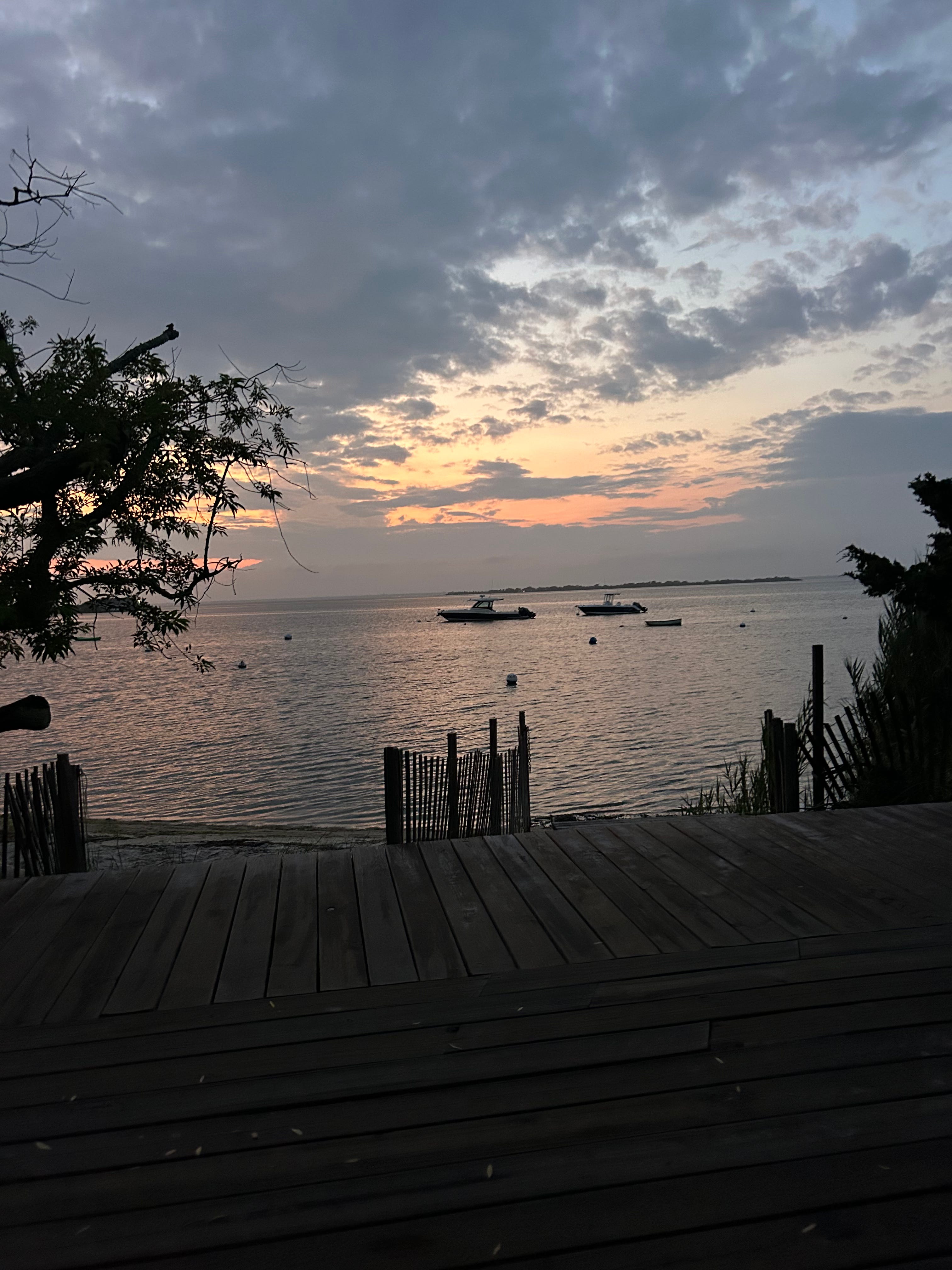
I first encountered the idea of “climate grief” in my twenties, before a global pandemic had turned my world upside-down—and made the impacts of climate change feel more obvious than ever (ICYMI / haven’t been following this newsletter from the start, climate change is increasing the risk of disease outbreaks like the Covid-19 pandemic by threatening to expose pathogens previously dormant in permafrost, and changing the prevalence, migration patterns, and behaviors of animals carrying viruses like SARS-CoV-2). Back then, I felt some grief about how the world would likely change in my lifetime—imagining the island where I’d spent much of my childhood eventually absorbed by the surrounding water, the sticky New York summers I’d once run around in becoming untenably tropical, and other harder to envision but inevitable impacts.
What I didn’t recognize was that the frequency of events like the LA 2025 fires would increase such that there would eventually no longer be time to process these feelings of grief. An unprecedented heat wave would hit the city I live in just months before flash floods drowned bus stations near where I grew up. Fires would be followed by more fires, floods by more floods. The COVID-19 pandemic would fade from public consciousness long before anyone got the support they needed to heal, but not long before new disease outbreaks began dominating headlines.
When news of the hantavirus outbreak first hit, people who know my story with Covid-19 began texting me. I’ve come to expect this—every time there’s a public health scare, I become a kind of informal triage point for friends and acquaintances who know I was hospitalized in New York in March 2020, before there was language for what was happening. As I have many times before, I pointed people toward reliable public health resources, noted that wearing a high-quality mask in crowded indoor spaces is rarely a bad idea, and noted, gently, that both fear-mongering and pressure to resume business-as-usual tend to impact media narratives about these sorts of disease outbreaks.
Then I sat down to write something for the peer support community at the mental health company where I work—a post to help members navigate the anxiety that headlines like these reliably spike—and suddenly, my composure evaporated. There it was again: the tingle of uneasy familiarity. I know what it is to communicate steadily to a frightened community when the information is still evolving and the stakes are high. I honed that ability in Body Politic’s Covid-19 support group and then again on this platform in 2025. And now I’m quite good at moving quickly in a crisis, gathering resources, cultivating community, communicating clearly without catastrophizing or minimizing.
But those skills came from somewhere painful. I am both grateful to have them in my arsenal and resentful to have to employ them when what I need is time to process everything that’s occurred. But the time never seems to come. And now, as I write this, there is a new Ebola outbreak spreading through the Democratic Republic of Congo and Uganda. One that is once again being described as “unprecedented,” due to the Bundibugyo strain having no approved treatment or vaccine—and having spread to hundreds of cases before it was even detected, because standard Ebola tests weren't designed for it.
I think that for many of us navigating compounding climate and public health crises, organizing becomes a form of processing. It’s how we metabolize trauma when there’s no time to sit still with it. The work of showing up for others becomes, out of necessity, the only container available for grief. But processing in real time, under duress, without distance or rest, is not the same as healing—even when it’s incredibly important work, work that I believe can be as beneficial to the organizer as it is to the communities at the center. After all, when I was sick with Covid-19, building the Body Politic Covid-19 support group was both a distraction from my grief, and a way to find purpose and connection in a moment that was otherwise deeply isolating.
I do think it is worth asking, however, who is doing this work, and what is it costing us?
It’s rarely the people with the most institutional resources who are building the peer-support networks, the mutual aid infrastructure, the neighborhood emergency plans. It tends to be those most directly affected: the chronically ill, the displaced, the communities that have long understood that no one in power is coming to save us. Climate change is accelerating at a rate that compounds this dynamic. The people who have already survived a pandemic, a fire, a flood, a heat wave, who are perhaps already living with the physical and psychological aftereffects, are often the same people who must show up again, and again, before the last crisis has been processed. Before there has been any real institutional reckoning with what we have endured.
The Climate Mental Health Network writes, “Research shows that grief is one of the most ubiquitous climate emotions. Properly honoring and integrating ecological grief helps us connect with others, with the earth as a whole, and to more fully experience a healthy range of emotions, including joy." Their resources, developed by trauma-informed psychologists and extreme weather survivors, are among the few that take seriously the idea that climate disasters don’t just end when flames are contained or floodwaters recede. Complex trauma, by definition, doesn’t resolve on its own timeline. It resolves, if it does, when the conditions causing it change, and when people have genuine support for processing what’s happened to them. Right now, most people I know have neither.
The people sending those group chat messages, the ones checking in on neighbors after a smoke alert, the ones writing peer support posts at their laptops through tears, are not doing this because they've healed. They're doing it because the need is immediate and the gap is obvious. That impulse is generous. It is also, in part, a symptom of a society that has never given us the time, resources, and permission to not be okay before being asked to show up again. The question is why we keep expecting the most traumatized among us to build solutions from scratch, in the middle of the next disaster, without rest, without resources, and without time to grieve.
Just one recommendation right now: Support the Victim & Family Fund for those impacted by the horrific attack on the Islamic Center of San Diego.